For commissioned artists
A practical guide to grid for artists
A grid for artists is most useful when it answers a concrete question: where does this form sit, and how large is it relative to the space around it? That question appears in nearly every representational subject, from a vase on a table to a city street. A grid makes it possible to compare position without relying only on memory or intuition. It can also be a reassuring first step when a blank canvas feels too broad, because the next mark belongs to a bounded part of the reference.
The best grid for artists is tuned to the image, not imposed on it. Select rows and columns that make meaningful areas without obscuring the subject. A figure needs enough vertical divisions to identify major joints; a still life may need a few broad cells for the silhouette and cast shadow. Use labels when you want to track progress methodically, then turn them off if you prefer a cleaner image. A monochrome preview is useful for assessing value structure, while a subtle coloured overlay preserves visual separation from a graphite or charcoal reference.
ArtGrid provides these tools in a static, browser-first page. After you choose an image, Canvas draws the overlay locally and the live preview responds to each setting. The paper size display converts your layout into exact millimetres for physical transfer, which is especially helpful when your target page is a standard A4, A3, or US Letter format. Download a PNG or JPG for a digital studio, or create a PDF with its printed drawing guide. The original image stays on your computer throughout.
When enlarging a reference, preserve the same row-to-column ratio even if the physical cells grow much larger. Test a few light rules before committing to the whole sheet. This small preparation check keeps the grid for artists dependable and can avoid a surprising amount of correction later.
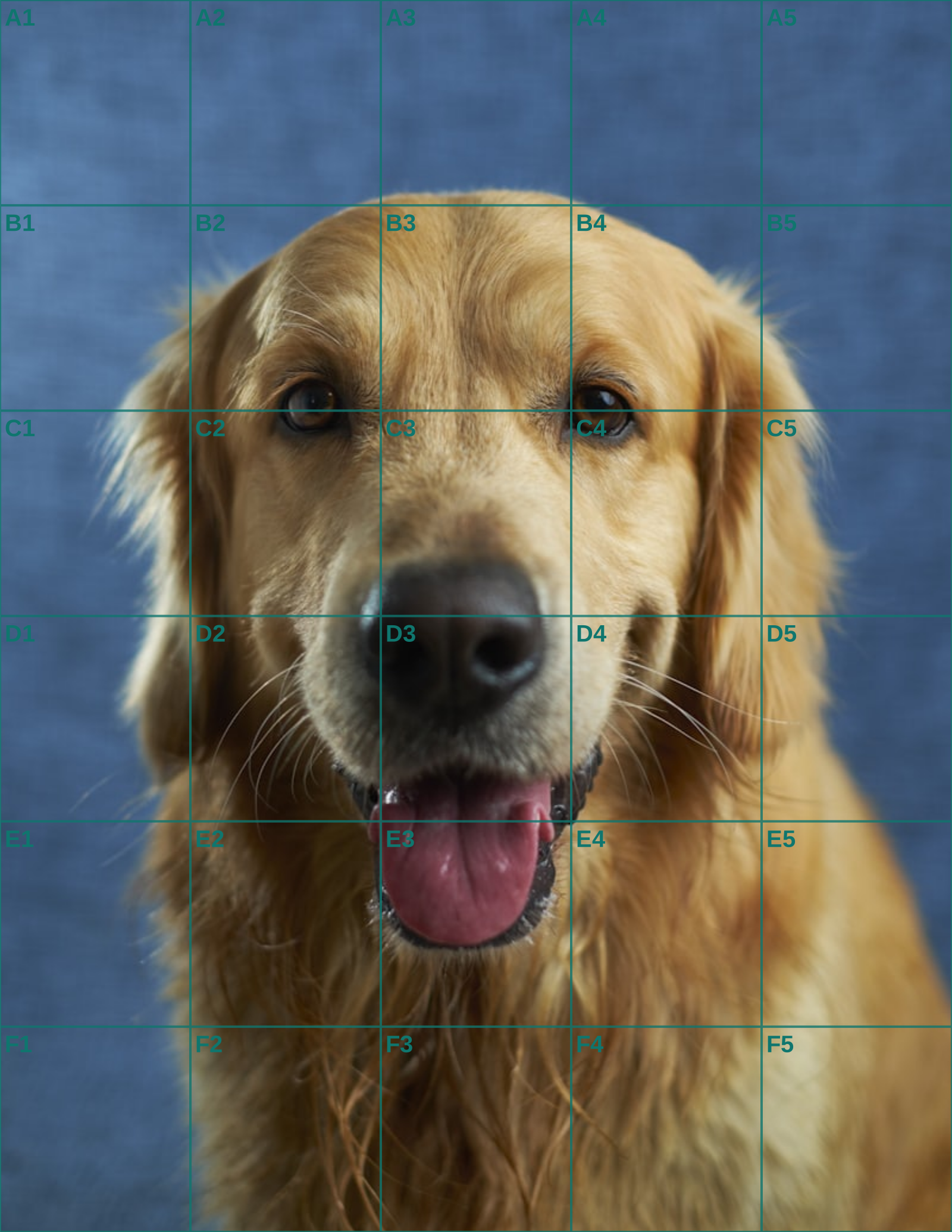
A grid for artists becomes especially useful when a client wants the same animal at a larger display scale. Keep the row and column count unchanged, but make the destination cells larger. If a 5 by 7 inch source uses seven columns and the final 10 by 14 inch support keeps the same crop, each destination division should be exactly twice the original physical width. The PDF’s stated spacing gives you a check before you commit paint. Measure the full width too; matching a single interval is not enough if the border was marked incorrectly.
A grid for artists is most useful when a repeat customer wants the same approved reference at several display scales. Keep the crop and row-to-column count unchanged, then enlarge the physical cells in proportion to the destination. This preserves the relationship of a muzzle to the border or a paw to the ground even when the drawing moves from a small gift to a large wall piece.
Work out the new interval before transferring anything. If a seven-column reference becomes twice as wide on the final support, each destination division should also be twice as wide, subject to the chosen border. The PDF's millimetre guide gives a concrete starting measurement. Check the complete ruled width as well as a single cell, since an incorrect margin can defeat an otherwise accurate calculation.
Prepare a separate export for every physical format. An A4 proof, an A3 drawing, and a US Letter study may show the same animal but they are not interchangeable print instructions. Name each file with the support size and approved crop. This makes it easy to return to a commission months later without guessing which printed grid belongs to which display version.
At the block-in stage, let the larger scale change your drawing decisions, not the underlying geometry. A large canvas may allow softer transitions in a cheek or more varied fur direction, but the central axis and outer silhouette still come from the same coordinate relationship. Begin with those long lines and compare the negative spaces before opening up the finer surface work.
Choose density with viewing distance in mind. A piece intended to be seen across a room does not benefit from mapping every tiny feature during transfer. Broad divisions can be more honest to its final reading. A close portrait viewed at arm's length may justify more landmarks around eyes and nose, but only if the artist can still recognise the mass of the head through the overlay.
Send a clean crop for client approval before making the scale-specific references. This is the moment to decide whether the background stays, whether the ears need more margin, and whether a frame will hide an edge. Once a crop is approved, preserve it unmarked and create the grid separately. That small file discipline keeps later enlargement from becoming an accidental recomposition.
Use the locally generated PNG or JPG beside a digital canvas, or the PDF for ruler-based paper work. The source photo stays in the browser during preparation, an important boundary for private commission references. When the layout has done its job, return to the clean image and make the final work feel like a portrait rather than a diagram.
When the reference is a close likeness, the portrait drawing grid guide covers facial landmarks; for the measured transfer itself, use the grid method walkthrough.
Continue the workflow
See Also
- artists grid
Continue with a companion guide when another display size needs its own transfer plan.
- art grid
Continue with a companion guide when another display size needs its own transfer plan.
- art grid tool
Continue with a companion guide when another display size needs its own transfer plan.
- grid method
Continue with a companion guide when another display size needs its own transfer plan.
- portrait drawing grid
Continue with a companion guide when another display size needs its own transfer plan.
Questions answered
grid for artists FAQ
Can a grid for artists help with composition?+
Yes. It makes placement, margins, and negative space easier to compare before you commit to detailed marks.
How many divisions should a figure use?+
Choose enough to locate major landmarks; start with roughly six to ten rows and adjust for the complexity of the pose.
Does this tool work offline after the page loads?+
The image processing and exports happen in your browser, with no image upload required.
Real output
See the grid before you make one
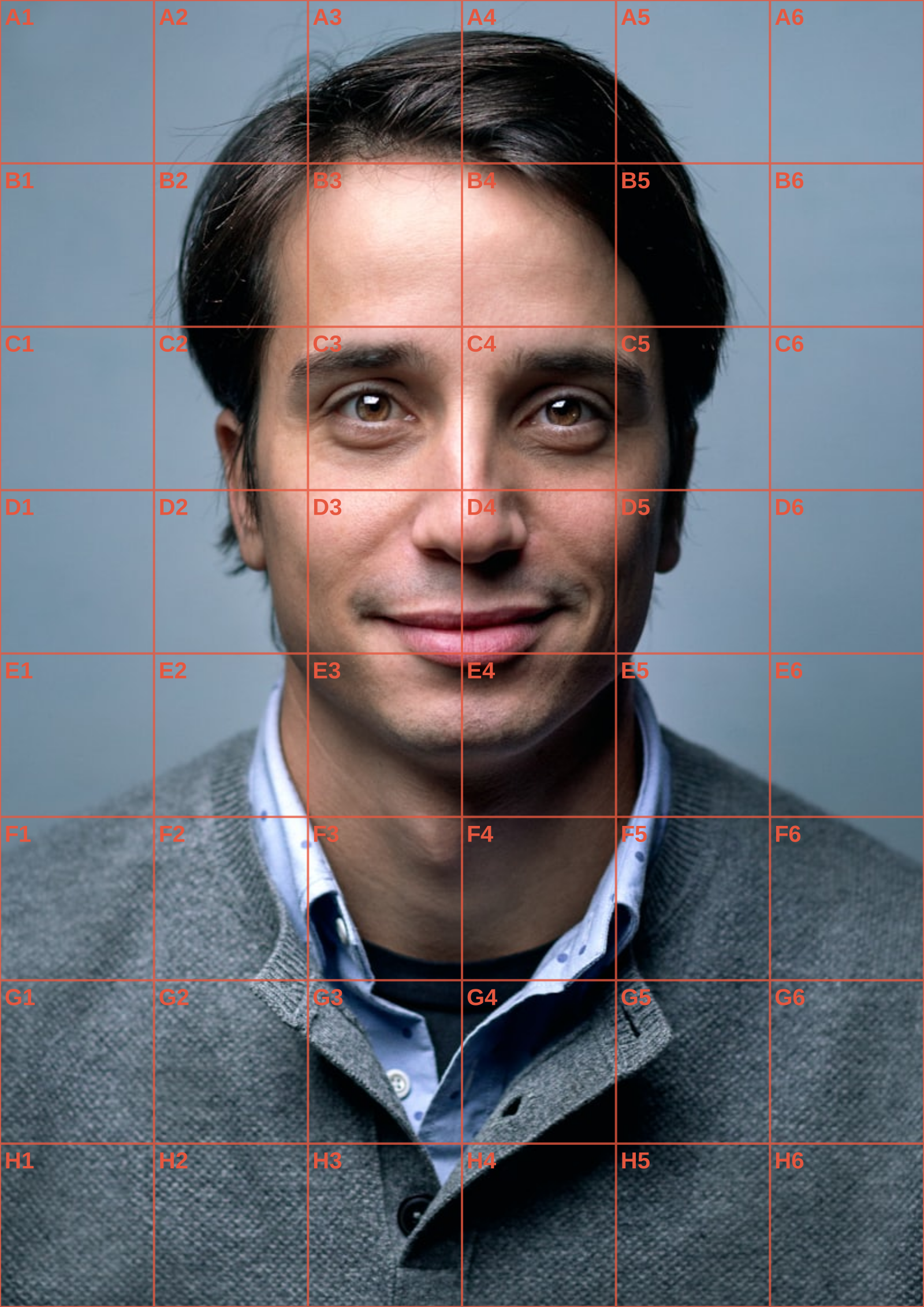
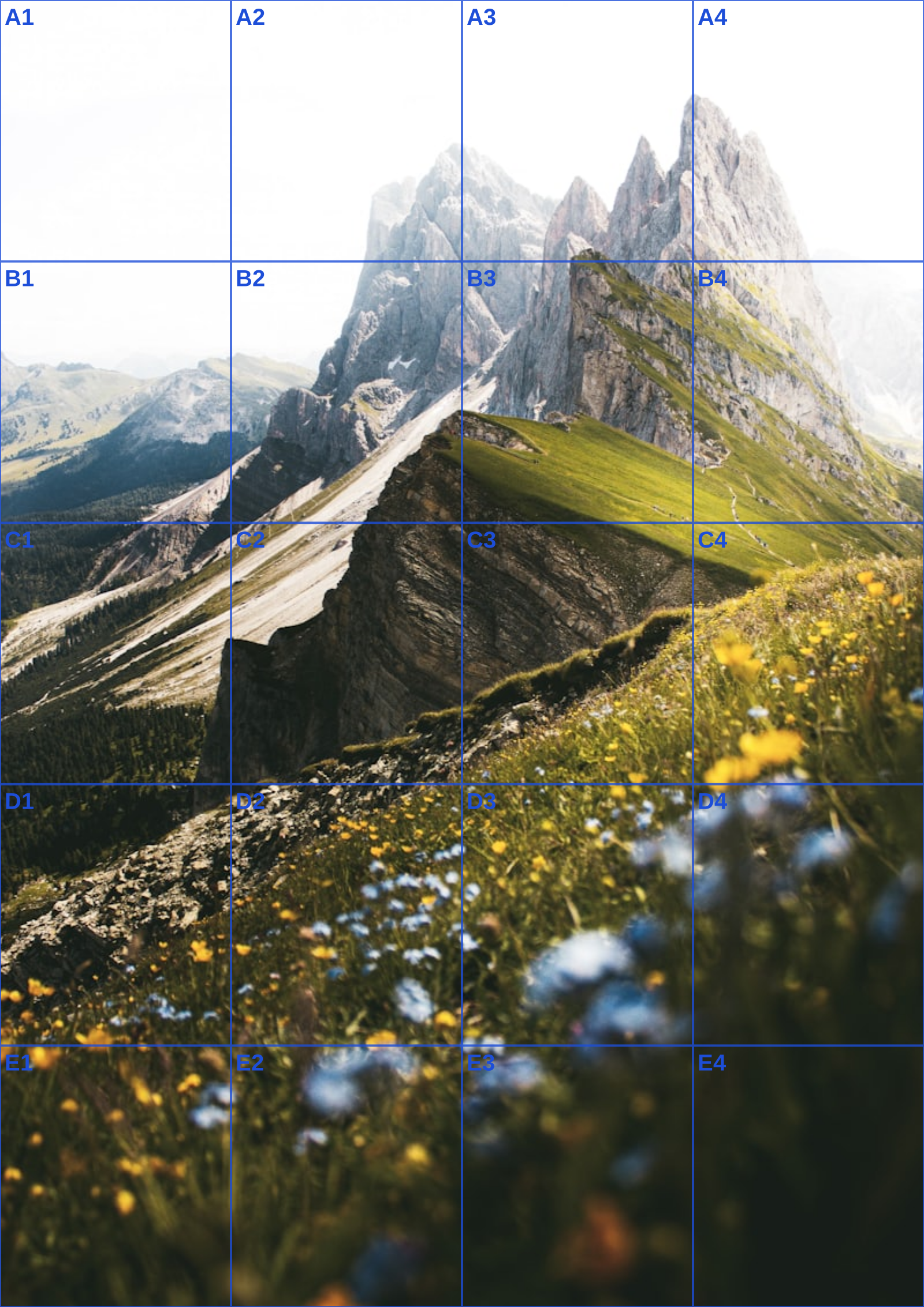
Three references run through this tool at different settings. The measurements are the spacing you would rule on paper at that size, so you can check them against a ruler after printing.